



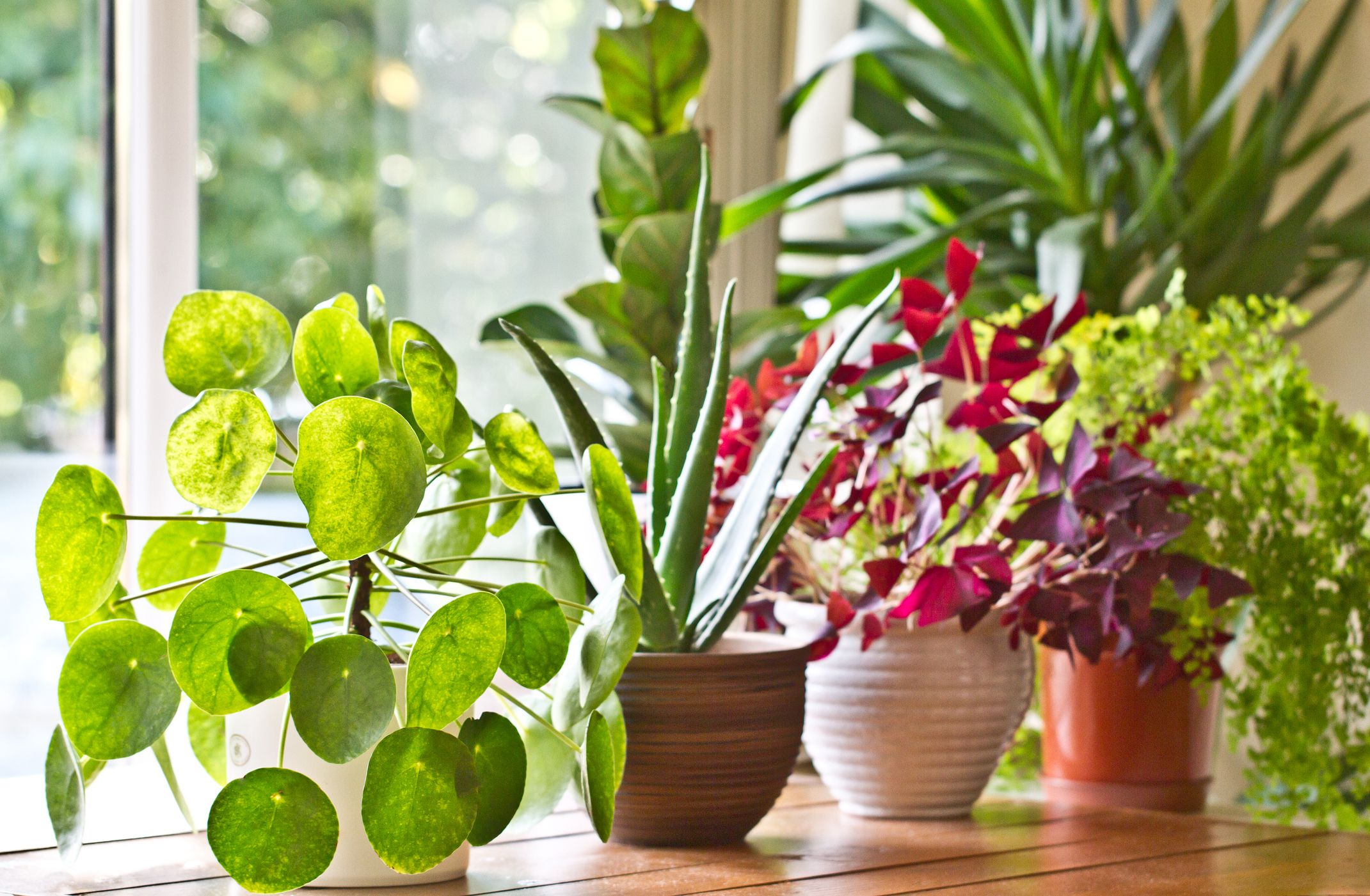
A good place to start when you are thinking about buying houseplants is to determine what light conditions you have available. Light tends to be a limiting factor in growing houseplants. As a general rule of thumb, most interior plants grow best in bright, indirect light. This is not a hard and fast rule; many plants can handle various light levels.
Each room in your house has a little different light condition, so take some time to think about these conditions before picking out a plant. For example, south-facing windows provide the greatest amount of light; this is amplified in the winter months. They make the perfect place for a plant that needs strong, direct light. An east facing window provides indirect sun most of the day. This can result in overall cooler temperatures for a plant. A westerly-facing window will typically give a plant indirect light in the morning and early afternoon, but strong direct sun and higher temperatures later in the afternoon.
Lastly, a north-facing window should be reserved only for plants that need very little light. If you currently have houseplants that look leggy or have smaller off-colored leaves, they may be suffering from too little light. If a plant gets overexposed to light, leaves may look sunburned, bleached or scorched. Overexposed plants can also have yellowing leaves. If you have a plant suffering from one of these conditions, it might be time to find it a different window.